

ASFYT 101
Foundations of Functional Anatomy & Kinesiology for Yoga Teachers
Build a practical understanding of anatomy and human movement so you can respond more skillfully to physical challenges and common injuries, communicate more clearly and effectively, and make more informed choices in your personal practice and teaching.
Online • Self-Paced • Yoga Alliance Continuing Education
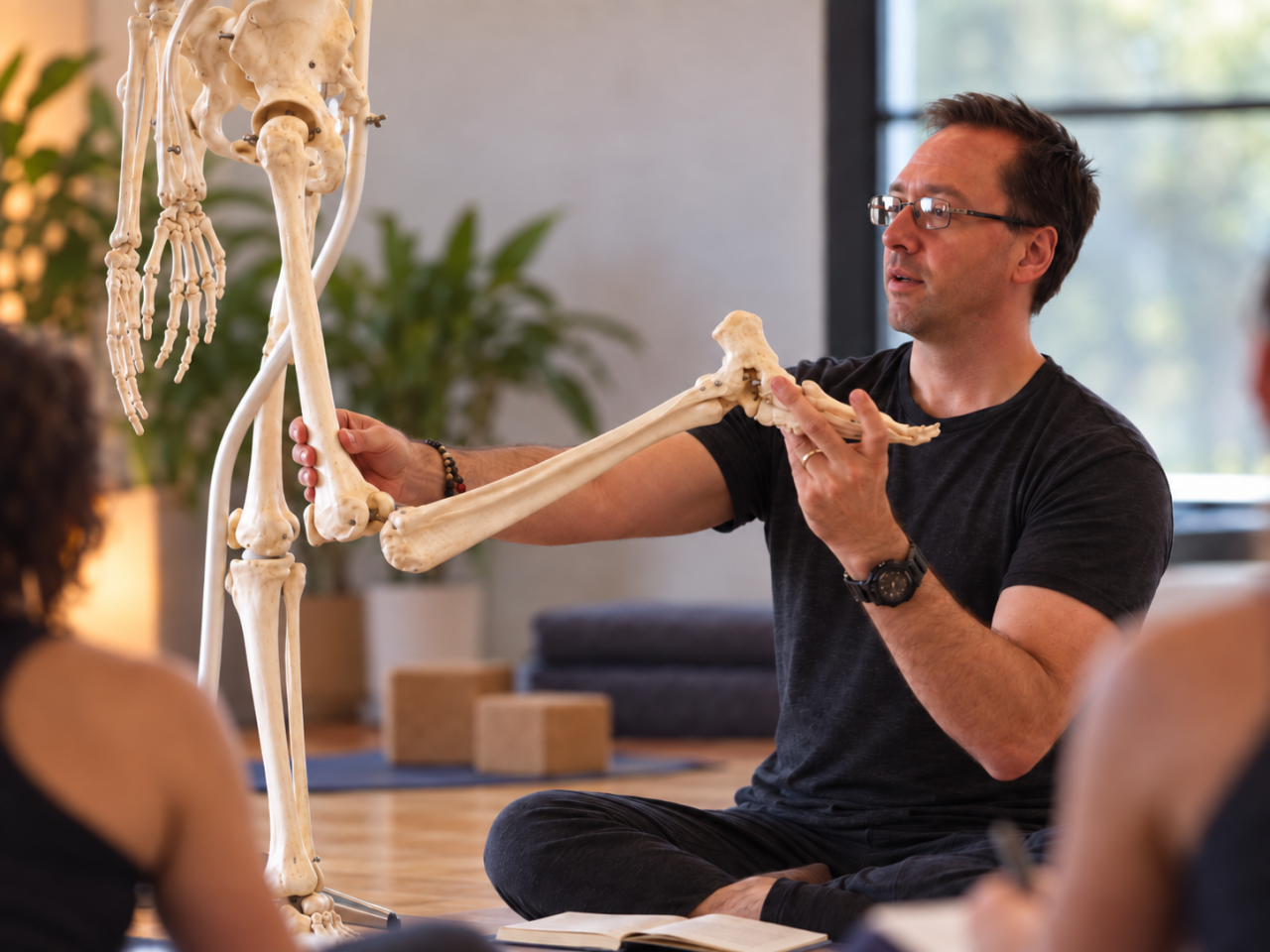
Anatomy Should Help You Teach More Skillfully
Many yoga teachers learn anatomy as a collection of terms to memorize: bones, muscles, joints, origins and insertions, planes of movement, and anatomical actions.
But knowing the vocabulary is not the same as knowing how to use it.
What happens when a student tells you they are returning to practice after an ACL tear? Or asks whether yoga might help with shoulder impingement? You do not need to diagnose or treat these conditions—but it helps enormously to understand what the student is talking about, how the relevant structures function, and what kinds of movement may deserve greater attention.
ASFYT 101 is designed to help you build that kind of practical understanding.
Rather than memorizing disconnected facts, you’ll learn a framework for thinking about anatomy and movement—so you can observe more clearly, communicate more precisely, and make more informed choices in your teaching.
What You'll Learn
By the end of ASFYT 101, you’ll be better equipped to:
- Use anatomical language with greater confidence when describing body position, joint movement, and movement relationships.
- Understand how joints actually move and how structure influences available range of motion.
- Make sense of muscular action beyond simply memorizing which muscles “do” which movements.
- Recognize common musculoskeletal injuries and physical challenges well enough to understand what students are telling you and where greater care may be appropriate.
- Observe movement more clearly by considering alignment, gravity, muscular effort, and the relationship between different body segments.
- Communicate more precisely through clearer verbal cues, movement instructions, and hands-on guidance.
Instead of collecting random anatomical facts, you’ll learn how to use what you know when real teaching questions come up.
A Different Approach to Anatomy
You don’t need to arrive at ASFYT 101 already fluent in anatomical terminology.
The course starts at the beginning—establishing a clear foundation of language and concepts before asking you to apply them. New terms are introduced in context, and each week builds on what came before, so you are not suddenly faced with a wall of unfamiliar vocabulary and expected to keep up.
But “foundational” does not mean superficial.
As the course progresses, you’ll move into a much deeper study of functional anatomy and human movement: how joints move, how muscles behave in different situations, how gravity changes muscular demand, how body segments move in relation to one another, and how all of those factors show up in yoga practice.
Over time, many teachers begin to experience a shift in the way they look at bodies. Instead of seeing only the outside shape of a pose, they begin to picture what may be happening underneath the surface—the bones, joints, muscles, and forces contributing to the movement.
It can feel a little like developing x-ray vision for movement.
Course Curriculum
ASFYT 101 is organized as a progressive journey from foundational anatomical language to applied movement analysis.
Module 1: Anatomical Orientation & Language
Build the vocabulary and reference points needed to describe the body clearly.
Module 2: Describing Human Movement
Learn how to describe movement precisely using joints, body parts, directions, and relative movement.
Module 3: Skeletal & Connective Tissue Foundations
Explore the structure and function of bones, fascia, ligaments, tendons, and other connective tissues.
Module 4: Joints & Range of Motion
Understand how different joints are structured, how they move, and what influences available range.
Module 5: Muscle Structure & Contraction
Learn how muscles create and control movement—and why “which muscle is working?” is often not a simple question.
Module 6: Neuromuscular Control
Explore how the nervous system coordinates movement, muscular activity, and motor control.
Module 7: Functional Roles Muscles Play
Examine how muscles can act as movers, stabilizers, decelerators, and more depending on the task.
Module 8: Proprioception & Balance
Understand how the body senses position and movement, and how that affects balance and coordination.
Module 9: Stretching & PNF
Look more closely at flexibility, stretching, and proprioceptive neuromuscular facilitation.
Integration Lab
Bring the concepts together through practical movement analysis and applied exercises.
What's Included
Every ASFYT 101 enrollment includes:
- On-Demand Video Lessons
Work through the course at your own pace, with clear explanations of the concepts covered in each module. - Visual Anatomy & Movement Resources
Follow along with diagrams, illustrations, and slide presentations designed to make complex ideas easier to understand. - Practical Exercises & Integration Activities
Apply what you’re learning through movement observation, palpation, balance work, and other experiential activities. - Knowledge Checks & Quizzes
Reinforce key concepts as you move through the course and identify areas that may need another look. - Downloadable Course Materials
Keep useful references and learning resources available for review during and after the course. - Lifetime Access*
Return to the course materials whenever you want to review or revisit a topic. - Certificate of Completion + Yoga Alliance CE Hours
Receive documentation of completion and eligible continuing education hours upon successfully finishing the course.
*Lifetime access is subject to Zenyasa Academy’s Terms of Use and means access for as long as the course remains available through Zenyasa Academy.
Choose How You’d Like to Take the Course
Self-Paced Course
Complete ASFYT 101 entirely on your own schedule. Move through the lessons, exercises, and assessments at the pace that works best for you.
10-Week Guided Cohort
Take the same online course as part of a 10-week group experience, with a weekly live check-in and exploration lab to discuss questions, work with course concepts, and apply what you’re learning to movement and yoga teaching.
Who This Course Is For
ASFYT 101 is a good fit for:
- Yoga teachers who want a stronger foundation in anatomy and kinesiology without assuming prior expertise.
- Newer teachers who feel uncertain when students bring up injuries, limitations, or movement challenges.
- Experienced teachers who want to sharpen their observation skills, deepen their understanding of movement, and feel more confident leading workshops or teacher trainings.
- Teachers who want clearer, more precise language for cueing movement and offering hands-on guidance.
- Teacher trainees or recent graduates who want to deepen the anatomy covered in a 200-hour training.
- Curious practitioners who want to understand movement more deeply, especially if they are considering teaching.
You do not need an extensive background in anatomy to begin. The course is designed to build that foundation with you.
About Your Instructor
Jason Ray Brown, MA, E-RYT 500, YACEP
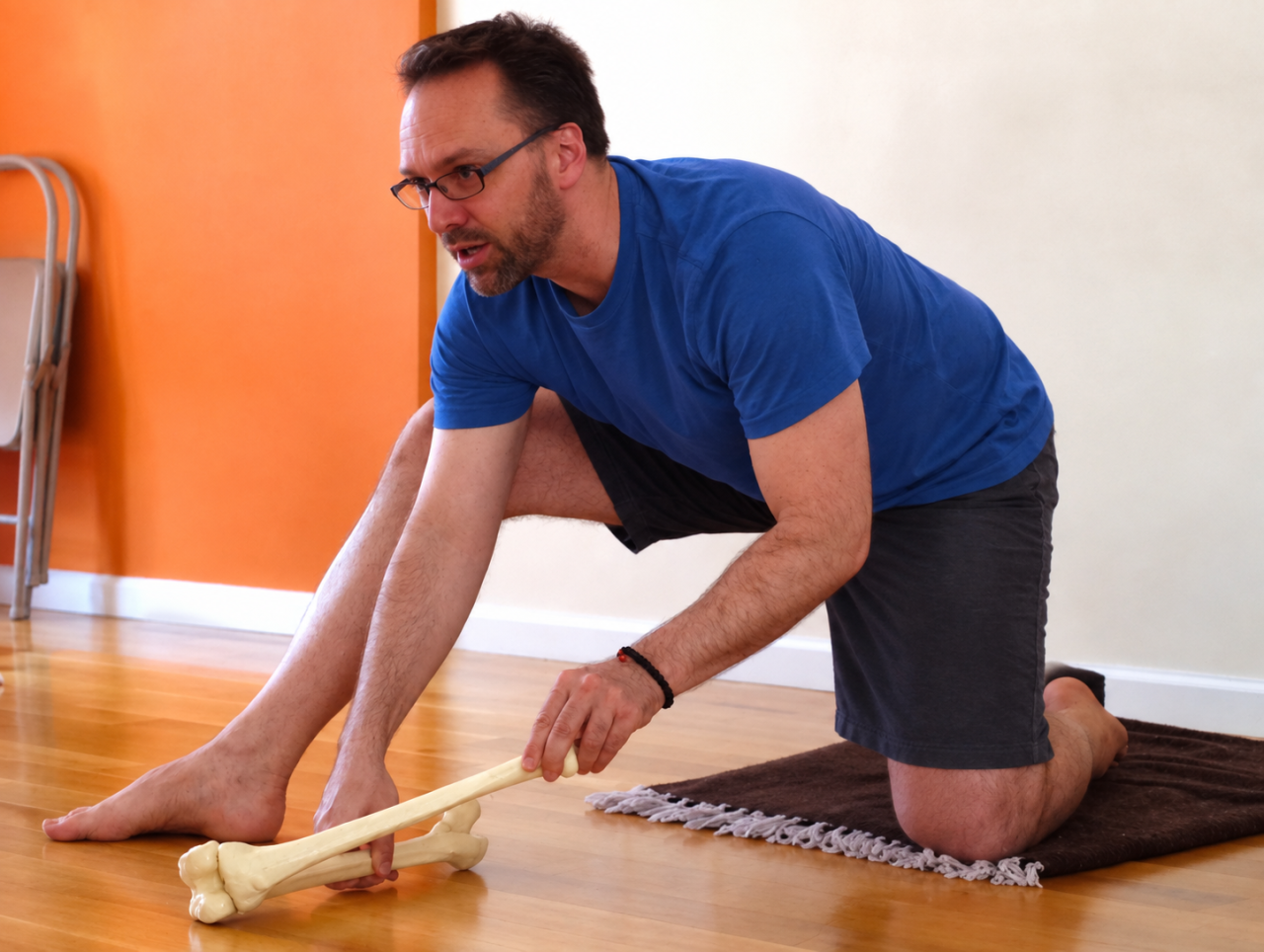
Jason has spent more than two decades studying the body through yoga, massage therapy, movement education, and health psychology. He has taught anatomy and kinesiology to yoga teachers for many years, with a focus on making complex concepts understandable, practical, and directly relevant to teaching.
His approach emphasizes functional anatomy rather than memorization—helping teachers understand how bodies move, reason through movement questions, and apply anatomical knowledge with greater confidence in real teaching situations.
Jason is an E-RYT 500 and Yoga Alliance Continuing Education Provider, and holds a master’s degree in Health Psychology. His background also includes extensive training and professional experience in therapeutic massage and hands-on bodywork.
What Past Students Say
Jeff Elsass
Owner, Core Pilates
“I have been a Pilates instructor for 10 years and a student of Pilates for 20 years, and this course gave me a greater understanding of the anatomical structure and engagement of the body than any course I have ever taken.”
Jessie Zalla
Owner, Zalla Pilates
“While anatomy can be incredibly confusing, Jason’s approach was the most thoughtful and straight forward I have ever experienced. We digested a ton of new information about injury prevention and how yoga poses can be so incredibly different from one body to the next.”

Kendra Coppey
Owner, Barefoot Yoga
“Being in a room with like-minded teachers and learning about anatomy and kinesiology as it relates to yoga has completely changed my teaching and my own practice for the better. I had so many ‘ah ha’ moments and enjoyed taking what I learned in each class and applying it to my teaching or my own practice.”

Ingrid Marcroft & Stephan Kolbert
Owners, Upper West Side Yoga & Wellness Studio
“Taking this training has made us so much more confident, both as yoga teachers and practitioners. Jason used clear, down-to-earth language and creative presentations to make anatomy come alive.”

Yoga Alliance Continuing Education
ASFYT 101 is offered through Zenyasa Academy as Yoga Alliance continuing education for registered yoga teachers.
Upon successful completion of the course, you’ll receive a certificate documenting your continuing education hours.
Yoga Alliance Continuing Education: [check back soon]
Category: Anatomy & Physiology
Choose Your Enrollment Option
Choose the learning format that works best for you. Both options include the complete ASFYT 101 course, lifetime access,* downloadable resources, quizzes, and a certificate of completion with eligible Yoga Alliance continuing education hours.
SELF-PACED
Complete the course entirely on your own schedule and return to the material whenever you want.
Regular Price: $395
Relaunch Price: $295
Includes:
- Full on-demand course
- Lifetime access*
- Downloadable course materials
- Knowledge checks and quizzes
- Certificate of completion
- Eligible Yoga Alliance CE hours
GUIDED COHORT
Take the same online course with the added structure and support of a 10-week learning group.
Regular Price: $595
Founding Cohort Price: $495
Includes everything in the self-paced course, plus:
- 10 weekly live check-ins and labs
- Real-time Q&A and instructor support
- Guided application of course concepts
- A clear weekly learning structure
- Small-group discussion and feedback
- Shared learning with fellow teachers
Frequently Asked Questions
Still have questions about ASFYT 101?
Here are answers to some of the questions students most often have before enrolling.
Do I need prior anatomy knowledge?
No. ASFYT 101 is designed to build from the ground up. The course begins with foundational anatomical language and concepts, then gradually builds toward more applied movement analysis. You do not need to come in already knowing muscles, bones, or anatomical terminology.
Is this course self-paced?
Yes. You can take ASFYT 101 as a stand-alone self-paced course and move through the lessons, exercises, and assessments on your own schedule.
What’s the difference between the self-paced course and the 10-week guided cohort?
The course content is the same in both formats. The guided cohort adds a weekly live check-in and exploration lab, giving you a chance to ask questions, work with course concepts in real time, and apply what you’re learning alongside a group of other students.
How long will I have access to the course?
Your enrollment includes lifetime access,* so you can return to the course materials whenever you want to review or revisit a topic.
*Lifetime access is subject to Zenyasa Academy’s Terms of Use and means access for as long as the course remains available through Zenyasa Academy.
Does ASFYT 101 qualify for Yoga Alliance continuing education?
Yes. ASFYT 101 is offered through Zenyasa Academy as Yoga Alliance continuing education. Upon successful completion of the course, you’ll receive a certificate documenting your eligible continuing education hours. The final number of CE hours will be listed once the course is fully finalized.
Do I need to be a yoga teacher to enroll?
No. The course is designed primarily for yoga teachers and teacher trainees, but serious practitioners and other movement professionals who want a deeper understanding of anatomy and human movement may also find it valuable.
Is this course appropriate if I already have anatomy experience?
Yes. The course starts with foundational concepts, but it does not stay at a beginner level. It moves into functional anatomy, movement analysis, muscular roles, neuromuscular control, proprioception, balance, stretching, and other applied topics. Experienced teachers often find that the course helps organize and deepen knowledge they may already have.
Will this course teach me how to diagnose or treat injuries?
No. ASFYT 101 is not a medical or rehabilitation course and does not train yoga teachers to diagnose or treat injuries. It is designed to help you better understand anatomy, movement, and common physical challenges so you can make more informed teaching choices and stay within the appropriate scope of yoga instruction.
Build a Stronger Foundation for the Way You See and Teach Movement
Develop the anatomical understanding, movement awareness, and practical reasoning skills that can help you teach with greater clarity and confidence.