

About Zenyasa Academy
Helping yoga teachers build the understanding they need to teach with greater confidence, clarity, and insight.
Zenyasa Academy grew out of my own experience as a teacher and educator—and a belief that learning becomes far more useful when we understand the context behind it. My goal is to help yoga teachers develop a stronger foundation in anatomy, movement, philosophy, and related subjects so they can make better sense of what they’re learning and apply it more thoughtfully in their own practice and teaching.

Jason Ray Brown,
MA, E-RYT 500, YACEP
Founder & Educator
Why Zenyasa Academy
Yoga teachers are often asked to learn complex subjects without first being given enough of the foundation needed to make sense of them.
An anatomy workshop might focus on a particular muscle, joint, or injury while quietly assuming that everyone already understands the language of movement, basic joint mechanics, muscle function, and the difference between concepts such as open- and closed-chain movement. A philosophy course may introduce an important text or teaching without enough historical or conceptual context to help students understand what it means—or how it might relate to contemporary life.
The result can be a lot of information without enough structure to organize it.
Zenyasa Academy was created to take a different approach: to build context before complexity, establish useful principles before diving into details, and help teachers understand not only what they are learning, but why it matters and how to apply it thoughtfully in practice and teaching.
The aim is to give teachers a stronger framework for making sense of what they learn, so they can use that knowledge with greater clarity, confidence, and discernment.
A Different Approach to Continuing Education
Good teaching begins with context.
At Zenyasa Academy, that means looking beyond isolated facts or fixed rules and asking what helps a teacher understand the bigger picture. Across anatomy, movement, alignment, and philosophy, a few principles guide the way the material is taught:
- Build the foundation first.
Complex ideas are easier to understand when you already have the language and basic concepts needed to make sense of them. - Consider the person, not just the posture.
Anatomy, proportion, mobility, strength, tissue compression, and individual goals all influence what may be appropriate for a particular student. - Understand the purpose behind the practice.
Traditional postures and teachings developed within specific historical, cultural, and philosophical contexts. Understanding that context helps us decide how—or whether—they should be adapted for contemporary practice. - Use principles rather than rigid rules.
The aim is to help teachers ask better questions, recognize important variables, and make thoughtful decisions rather than simply repeat instructions.
Whether the subject is functional anatomy, alignment, nervous system regulation, or yoga philosophy, the goal is the same: to give teachers a stronger framework for understanding what they are learning and applying it with greater confidence and discernment.
Meet Jason Ray Brown
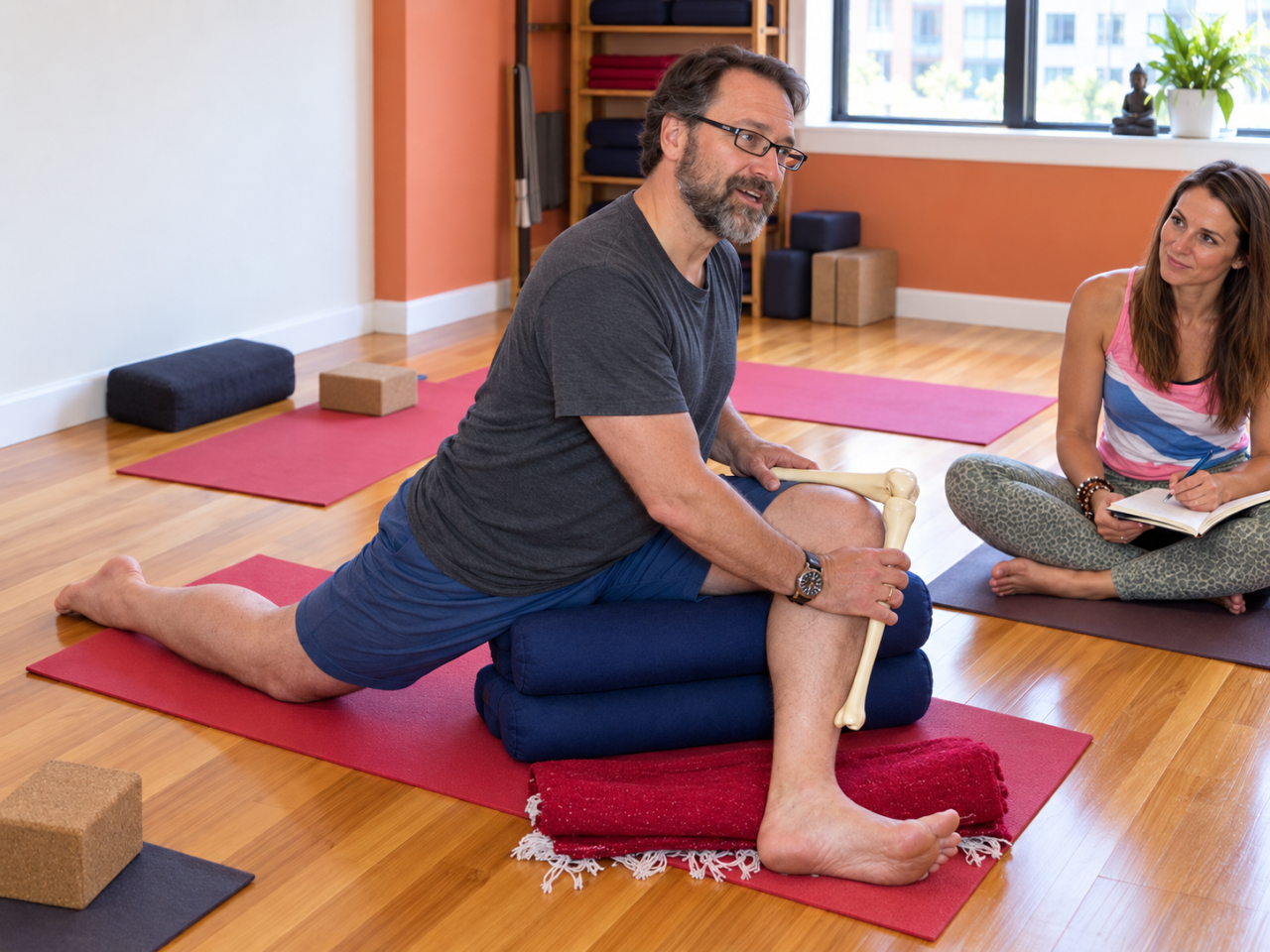
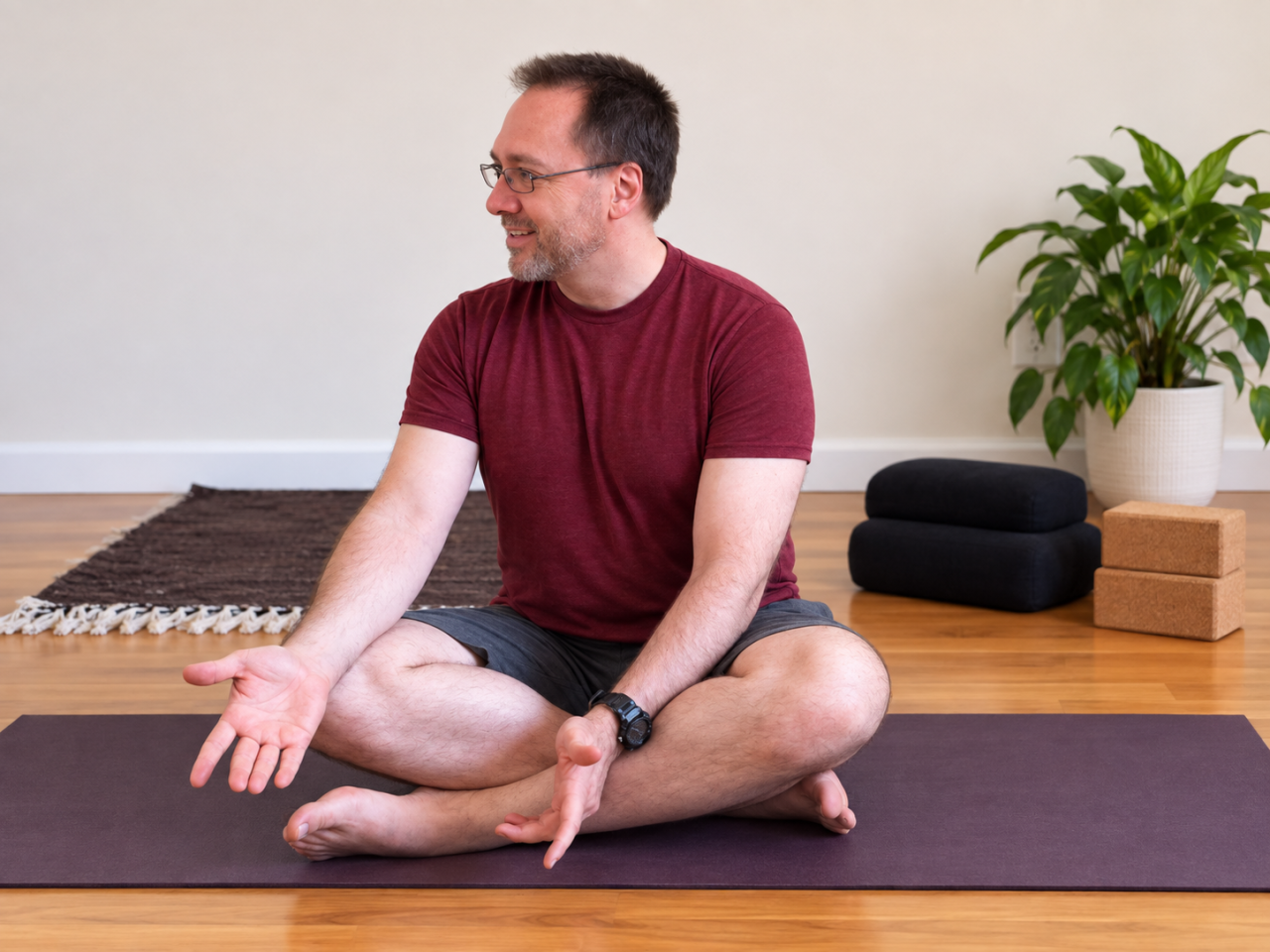
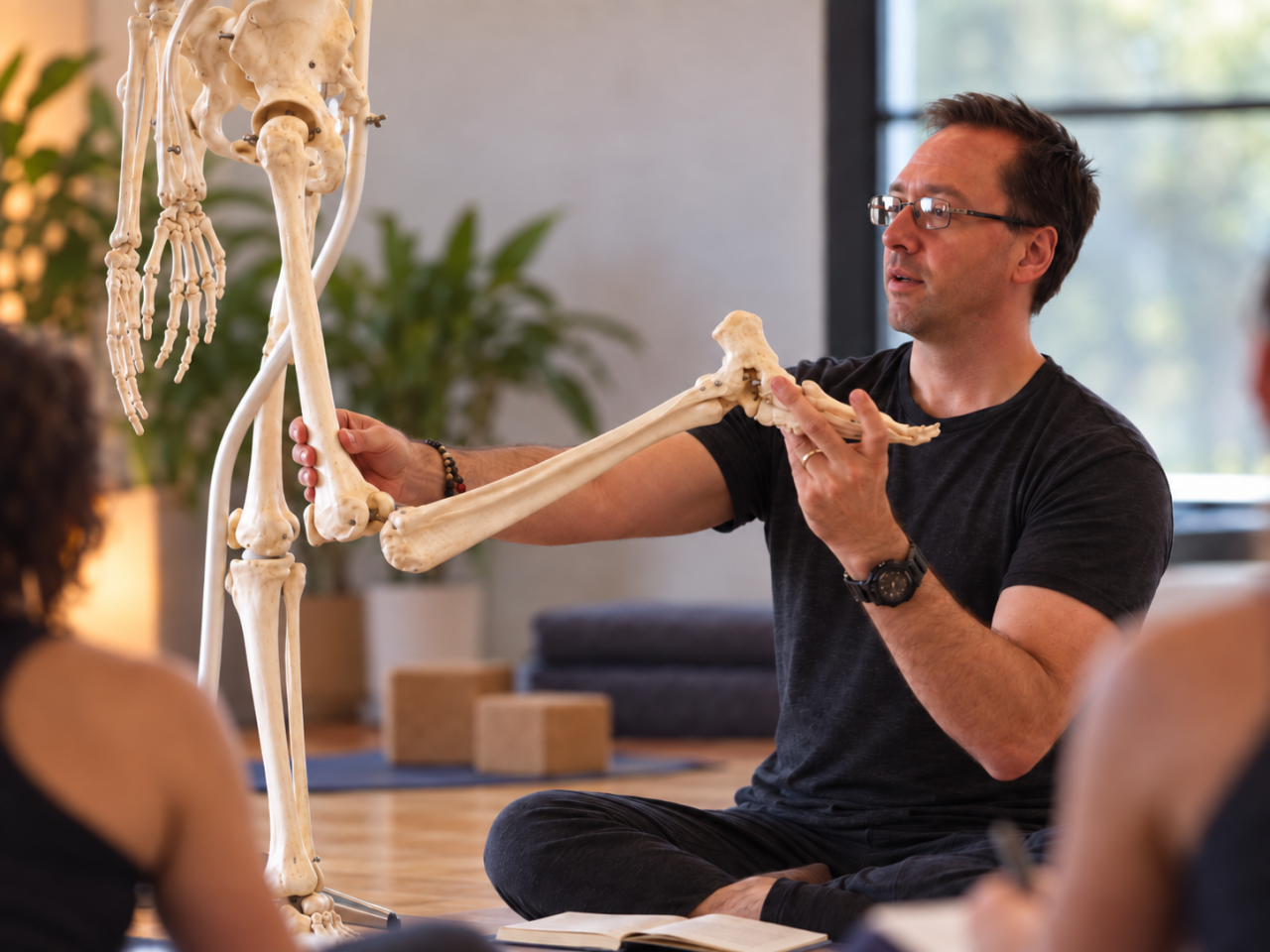
I’ve spent nearly thirty years studying yoga, movement, anatomy, bodywork, psychology, and contemplative practice—and much of that time sharing what I’ve learned with others.
Over time, those subjects became less separate in my mind. Anatomy changed the way I thought about alignment. Massage therapy changed the way I understood individual bodies. Psychology and contemplative practice changed the way I thought about stress, habit, attention, and change. Teaching yoga teachers forced me to keep asking a practical question:
How can I make complex ideas easier to understand without oversimplifying them?
That question has shaped much of my work as an educator.
I’ve taught yoga and anatomy, developed and led teacher trainings, worked as a licensed massage therapist, owned and operated a yoga studio, and earned a master’s degree in health psychology. Each of those experiences has influenced the way I teach today.
Rather than presenting information as a collection of facts to memorize, I try to build enough context that students can understand how the pieces fit together, ask better questions, and develop confidence in their own ability to reason through what they’re seeing.
My Approach to Yoga Education
My approach to yoga has changed considerably over the years.
Some of that change came through personal experience. I sustained injuries to my shoulders, knees, low back, and neck—sometimes because I was too goal-oriented in my practice, and sometimes because I simply didn’t yet understand the risks involved in the postures I was practicing. I also watched other teachers and students struggle with injuries of their own.
Studying musculoskeletal anatomy and injury mechanisms at the Swedish Institute gave me a different lens through which to understand those experiences. Later, studying exercise science raised additional questions. Yoga is often described as a practice that creates musculoskeletal balance, but I began to wonder whether that claim always holds up in practice. If we perform large numbers of pushing movements such as Chaturanga, for example, where are the complementary pulling movements that help balance the shoulder girdle?
My thinking about yoga philosophy evolved as well. Exploring the Bhagavad Gita, the Upanishads, Buddhist teachings, and the broader traditions surrounding yoga exposed me to teachings that often felt more narrative, relational, and immediately applicable to everyday life than some of the more abstract material I had encountered in the Yoga Sutras.
Over time, these experiences made me more interested in a broader question:
How can we preserve what is valuable in yoga while also examining it through the lens of contemporary knowledge, lived experience, and the needs of modern practitioners?
That question continues to shape the way I teach anatomy, movement, philosophy, and yoga teachers more broadly.
What You Can Expect as a Student
My goal is to create learning experiences that are clear, practical, and intellectually engaging—without assuming that you already know everything you need to know.
When you study with Zenyasa Academy, you can expect:
- Clear foundations
New concepts are introduced with enough background and context to help you understand how they fit into the larger picture.
- Practical application
The emphasis is not only on understanding ideas, but on seeing how they relate to real bodies, real students, and real teaching situations. - Room for questions and complexity
Yoga, anatomy, movement, and philosophy rarely fit neatly into simple rules. Courses are designed to help you become more comfortable thinking through nuance rather than searching for one universally correct answer. - Respect for tradition and contemporary knowledge
Traditional teachings are explored thoughtfully, while also considering what anatomy, psychology, movement science, and modern lived experience can contribute to the conversation. - Support for independent thinking
My aim is not to tell you exactly what to think, but to give you enough understanding to evaluate ideas, ask better questions, and make more informed choices in your own practice and teaching.
Instead of collecting random anatomical facts, you’ll learn how to use what you know when real teaching questions come up.
Experience & Qualifications
Yoga Teaching & Teacher Education
- Nearly 30 years of yoga practice and teaching
- E-RYT 500 · Yoga Alliance Continuing Education Provider (YACEP)
- Certified Hatha Yoga Teacher · Integral Yoga Institute
- Certified Vinyasa Yoga Teacher · OM Yoga Studio
- Former Owner · Zenyasa Yoga & Wellness Studio
- Experience leading yoga teacher trainings, anatomy education, workshops, and continuing education
- Previous teaching experience at Integral Yoga Institute, OM Yoga Studio, YogaWorks, Pure Yoga, Equinox, Reebok Sports Club, and other NYC studios and health clubs
Anatomy, Bodywork & Health
- Former New York Licensed Massage Therapist · Swedish Institute
- Neuromuscular Therapy with Jeff Mahadeen · The Muscular Wellness Institute
- Clinical Orthopedic Manual Therapy with Joseph Muscolino · Center for Advancement of Therapeutic Arts
- More than 20 years of professional bodywork experience in spas, health settings, and private practice in NYC
Education
- MA, Health Psychology · Touro University Worldwide
- BA, Theater Arts · Gonzaga University
- A.A. Speech Communication · Foothill College
A Place to Ask Questions, Learn & Grow as a Teacher
My own yoga path has been an ongoing process of questioning, learning, reconsidering, refining, and sharing. I don’t believe that learning ends with one final answer, and my own views on postural alignment, philosophy, injury prevention, and other aspects of yoga have evolved many times over the years.
Zenyasa Academy grew out of that same impulse: to keep asking questions, deepen our understanding, and explore how what we learn can become useful in real life and real teaching.
If you value curiosity, growth, and thoughtful exploration, I’d be glad to have you join me on the journey.